From Letraset to LLMs: Curation is the Craft

There’s a particular kind of grief that shows up in creative contexts: the mourning of methods and past technologies, appearing as both elegy and rallying cry for “how we used to make things.” I see it in online tirades begging us to remember analog and reject AI as though technology were a threat rather than a new material. But the past needs a bridge, not a museum.
Grief taught me this with brutal clarity. When my husband died I didn’t just lose him. I lost the future we’d mapped together, the rhythms we’d built, and our shared language. My envisioned future evaporated, leaving behind tools that no longer fit the work ahead. I could have stayed in preservation mode, treating my past like a museum. Instead, I asked, “What can I carry forward?”
First, a look back…
I was 11 when I decided that a career in design was for me. But it wasn’t exactly a plan…it was a recognition. I saw something in the collision of images and ideas that felt groundbreaking: The Face magazine with its experimental typography and smart layouts; Vivienne Westwood’s safety pins as sartorial rebellion; Comme des Garçons ads treating white space like a dare; austere, poignant album covers by Neville Brody, Peter Saville, and Vaughan Oliver.
And then in high school, the writing of Hermann Hesse showed me that beauty could be quiet and devastating. Jiddu Krishnamurti taught me that freedom meant questioning everything. Wim Wenders and Jim Jarmusch made films where time moved differently and silence held weight. Words in the hands of Barbara Kruger and Jenny Holzer were like knives and honey.
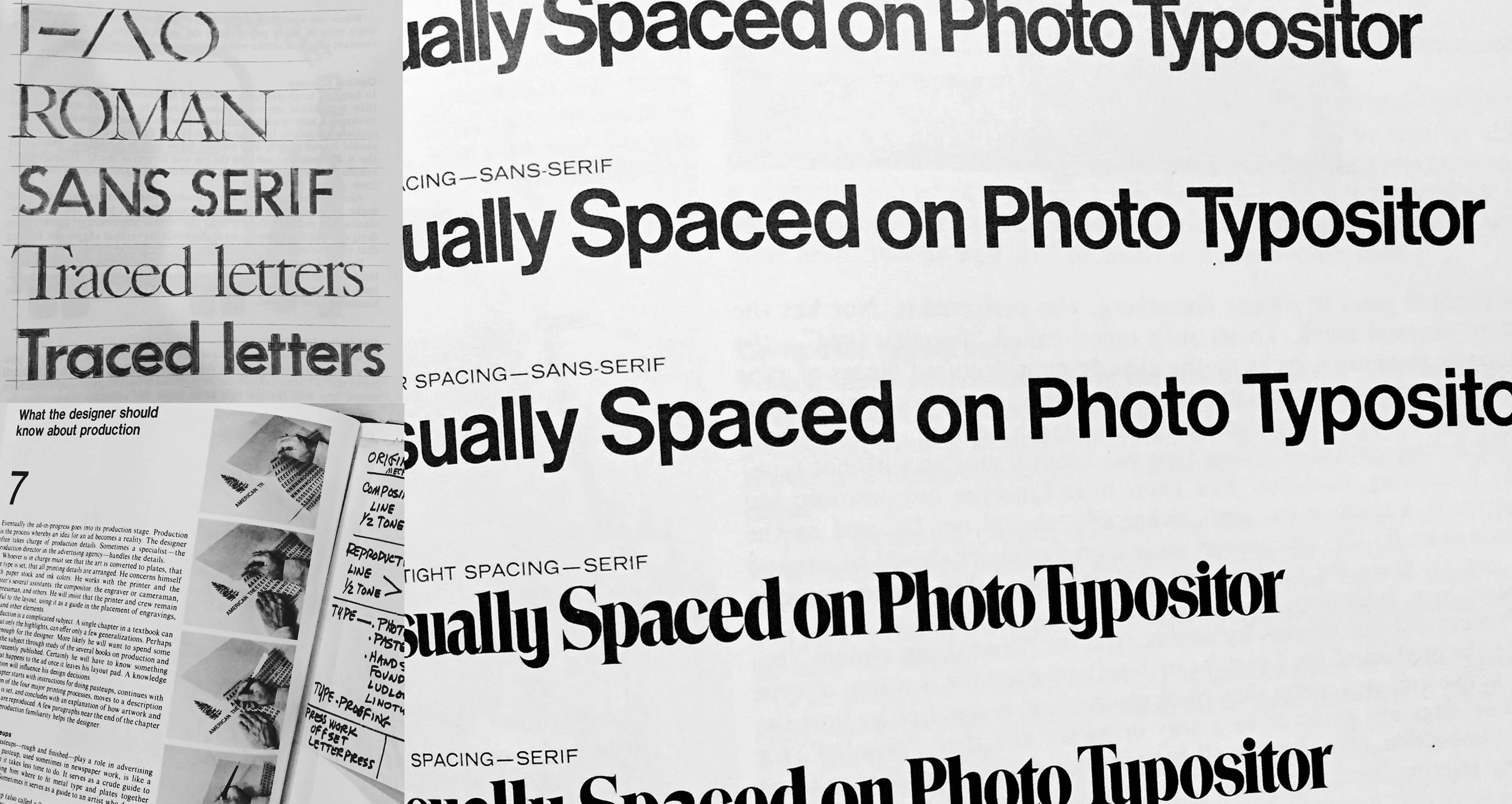
My college years were a transitional period in design. Letraset and paste-up shared space in my school’s graphics lab with the first Macintosh computers. I learned both languages and applied them to the past and present because both required a sharpening of craft through repetition and practice. Fortunately, the tools didn't create a sense of over-reliance or lack of judgement. Whether I was cutting acetate or setting type in QuarkXPress, every move was my decision.
Today, AI requires us to be intentional, but because it generates content at dizzying speed, the relationship between maker and material has fundamentally changed. Now, the tool proposes…and yet…it's not over. AI demands that we take extra time to curate, edit, accept, or reject. AI can be deceptive, hallucinate, and fabricate in ways that our earlier tools did not. So…
…what used to be the labor of creation is now the labor of verification, which is easier to underestimate. It’s easier to skip over, and easier to make mistakes.
You can’t hone your craft without getting really good at curation.
What mattered with the X-Acto knife wasn’t the blade. It was the eye that knew where to cut, and why. The Comme des Garçons ads weren’t radical because they “looked different.” They were radical because Rei Kawakubo understood negative space as a form of communication. Vivienne Westwood used the sewing machine to deconstruct and refine her product. The craft was in the vision, not the tool.
Craft is about intention meeting material with enough skill to make something true.
This principle still applies to the things I’m making today.
When I’m thinking about conversational flows for an AI agent, I’m applying a whole host of more recent learnings, but also what I learned from those early inspirations: rhythm, pacing, clarity, empathy, the knowledge that a single word can shift meaning, and that a well-placed pause can build trust.
When I’m thinking about writing an essay for Digital Widow, I begin with an overwhelming surplus of raw, contradictory, and often messy material. The craft is in choosing what to shape and share. Not everything needs to be said. But the things that do need saying require the same intention and skill as any other design problem.
In both examples, I ask myself, “What do I want someone to feel? What do I want them to understand? Where should I focus - for their benefit?”
All of it takes time and intentionality. The slowness and practice required to learn and sharpen a craft is what makes the work worth something.
Raise standards in every way possible.
We don’t solve the AI slop problem by abandoning the tech. We solve it by raising standards and by cultivating the discernment to know the difference between raw, unchecked output and slow, deliberate intention.
AI can deliver something polished in seconds…but polished isn't the same as yours. The meaning comes from what you do next: make deliberate choices about what to keep; decide what to cut; explore where to push further; draw from inspiration based on your own experiences. That's where craft lives. Hone it, and you're already ahead.
When I lost Peter, I had a choice: remain in the past, or build a bridge to what comes next. Every new tool, every shift in how we make things, every loss that sends us down a different path asks the same questions: What do I carry forward? What do I let go? What can I shape into something that wouldn't exist otherwise?